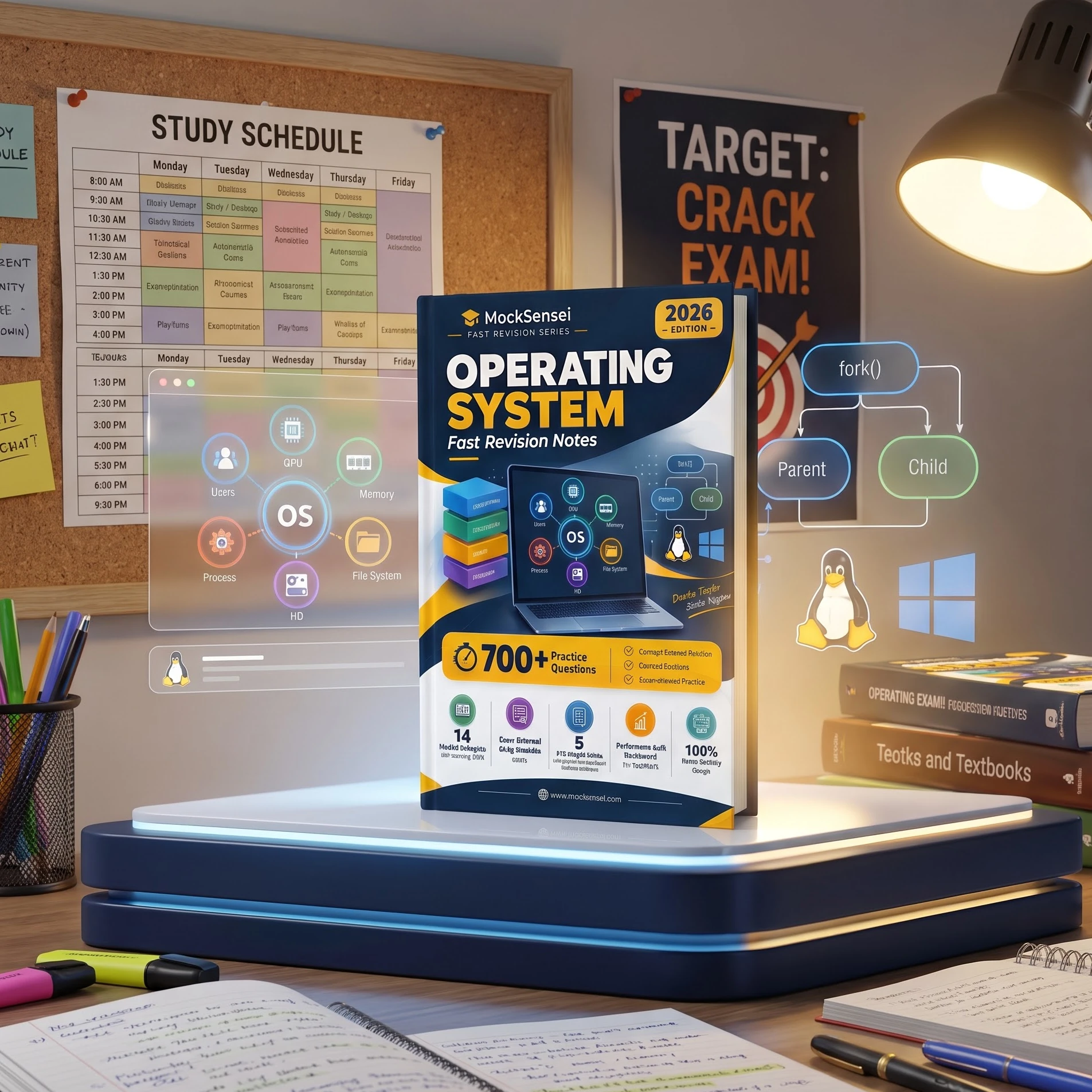
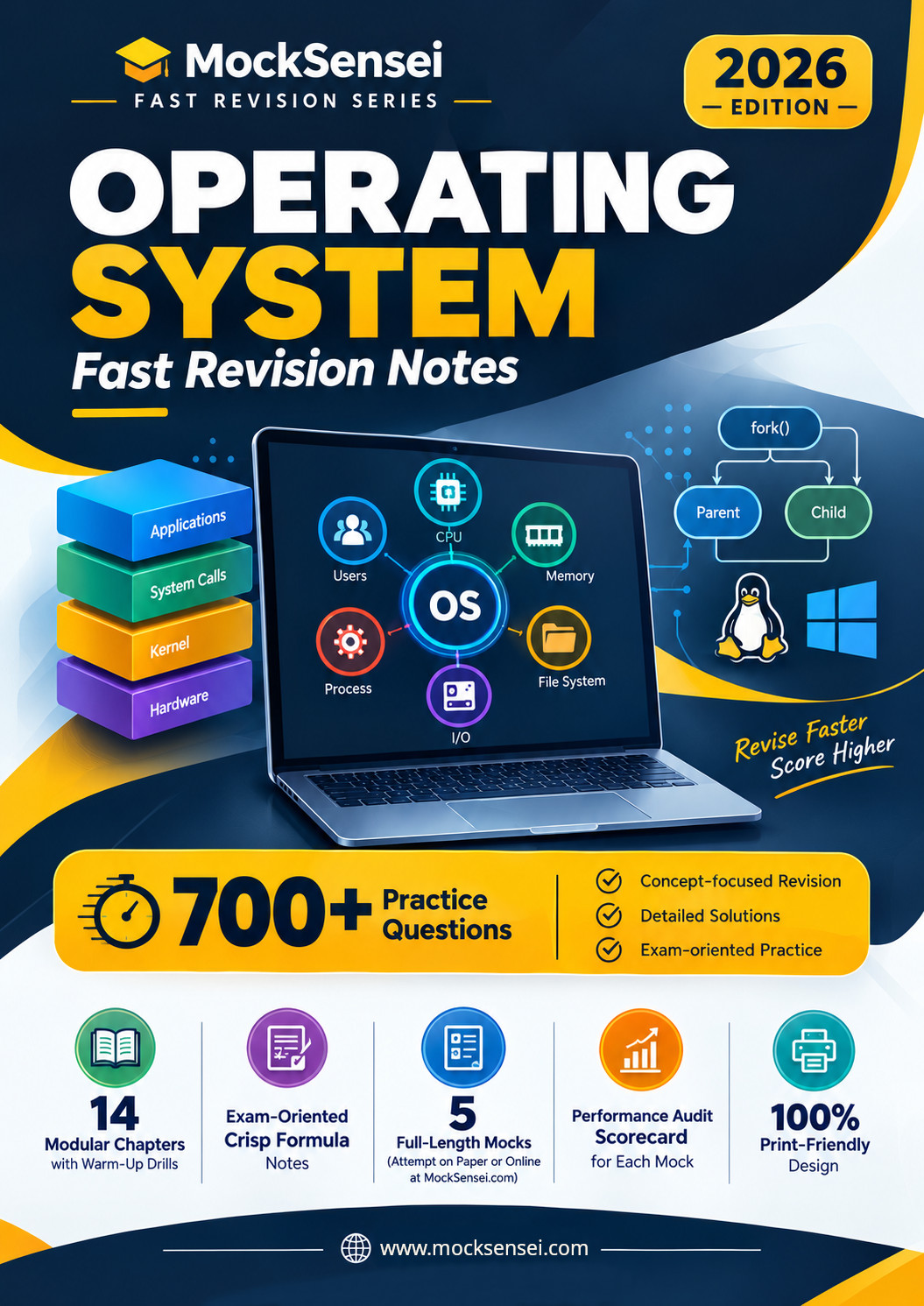
Operating Systems Fast Revision Notes
7 Modules, 12 Chapters, 700+ Questions & 5 Mocks. Formatted for quick revision, complete with step-by-step algorithms, calculations, and verified answer keys.
Instant PDF Delivery · Print-Friendly A4 · Lifetime Updates
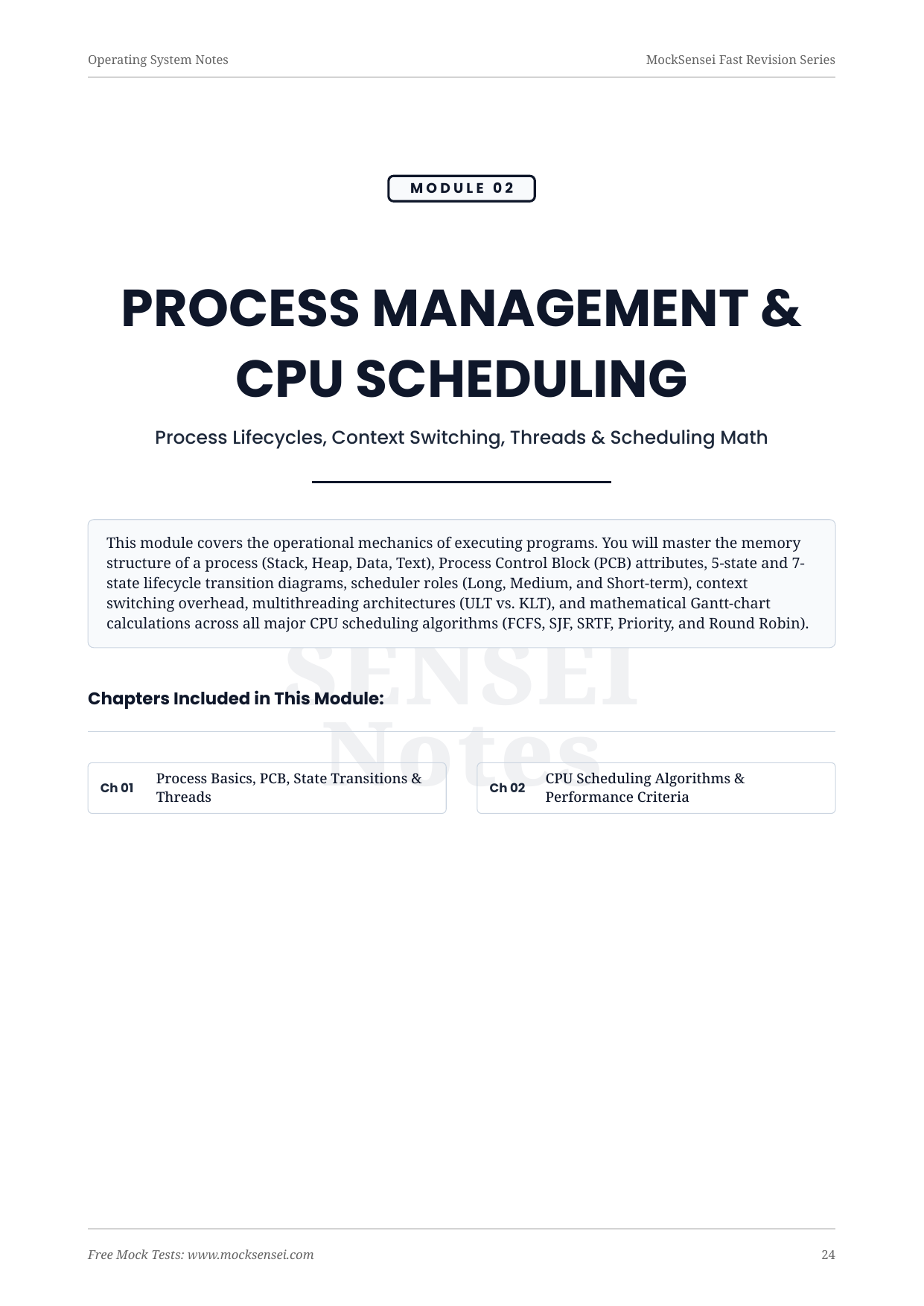
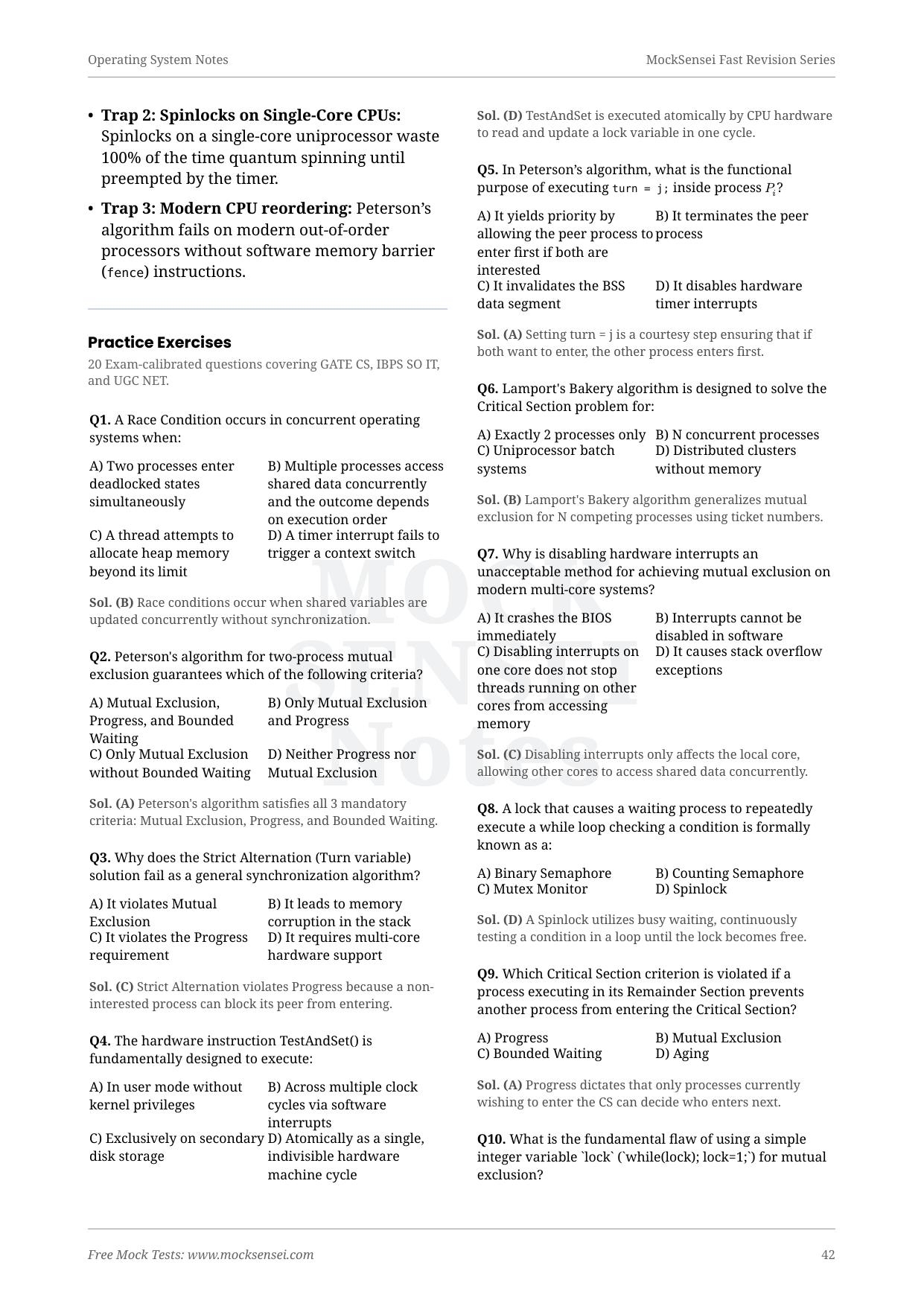
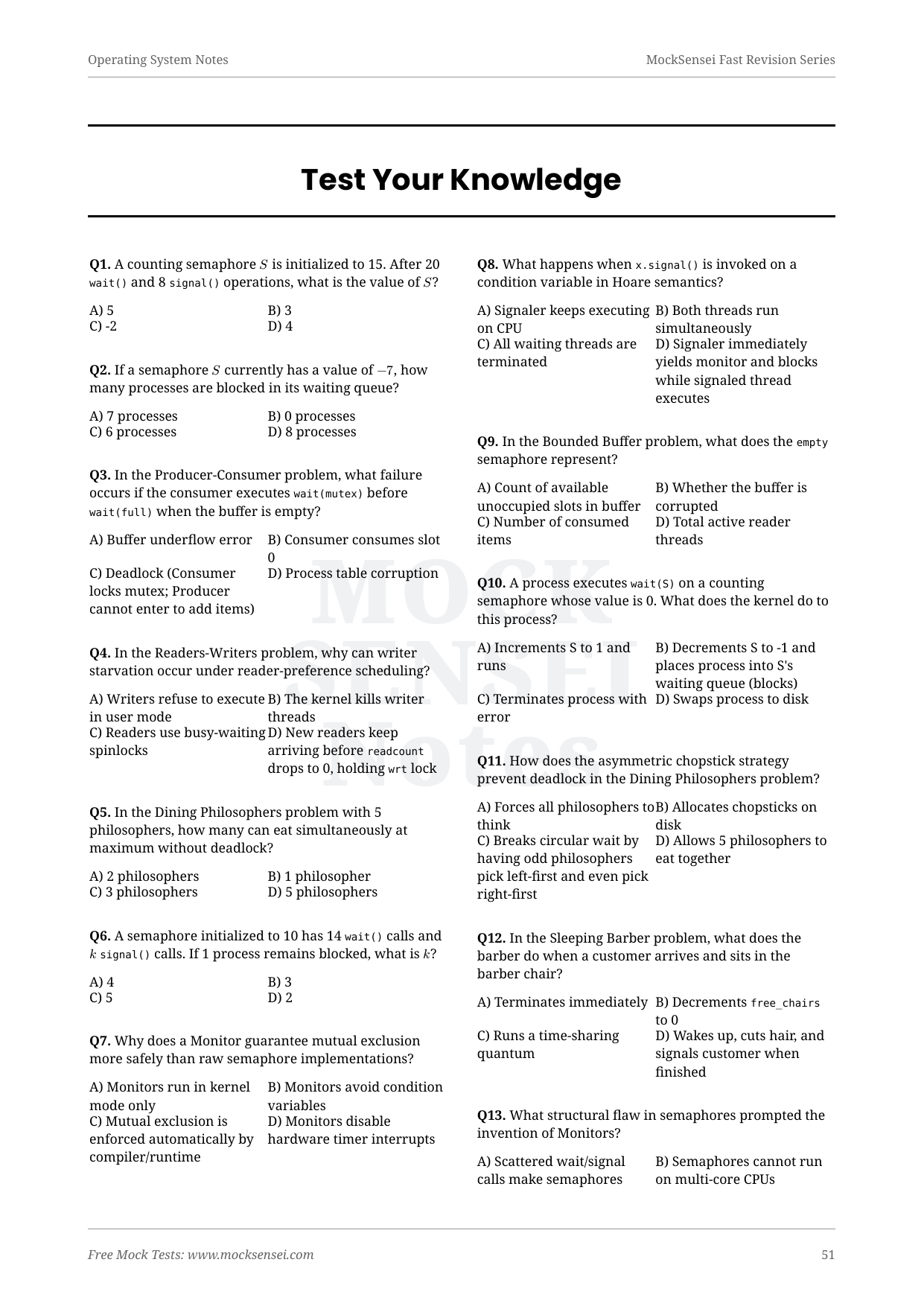
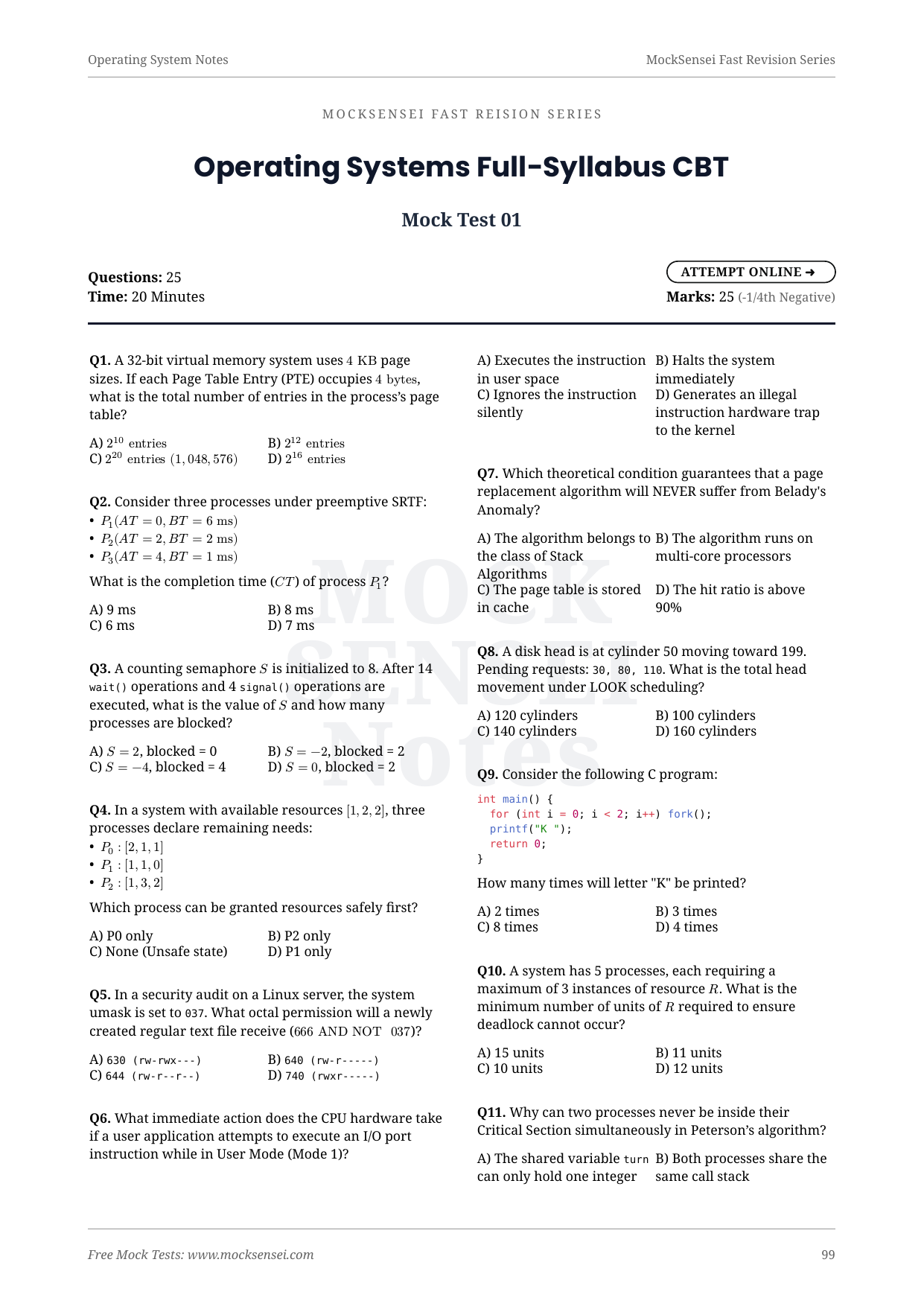
Sneak Peek
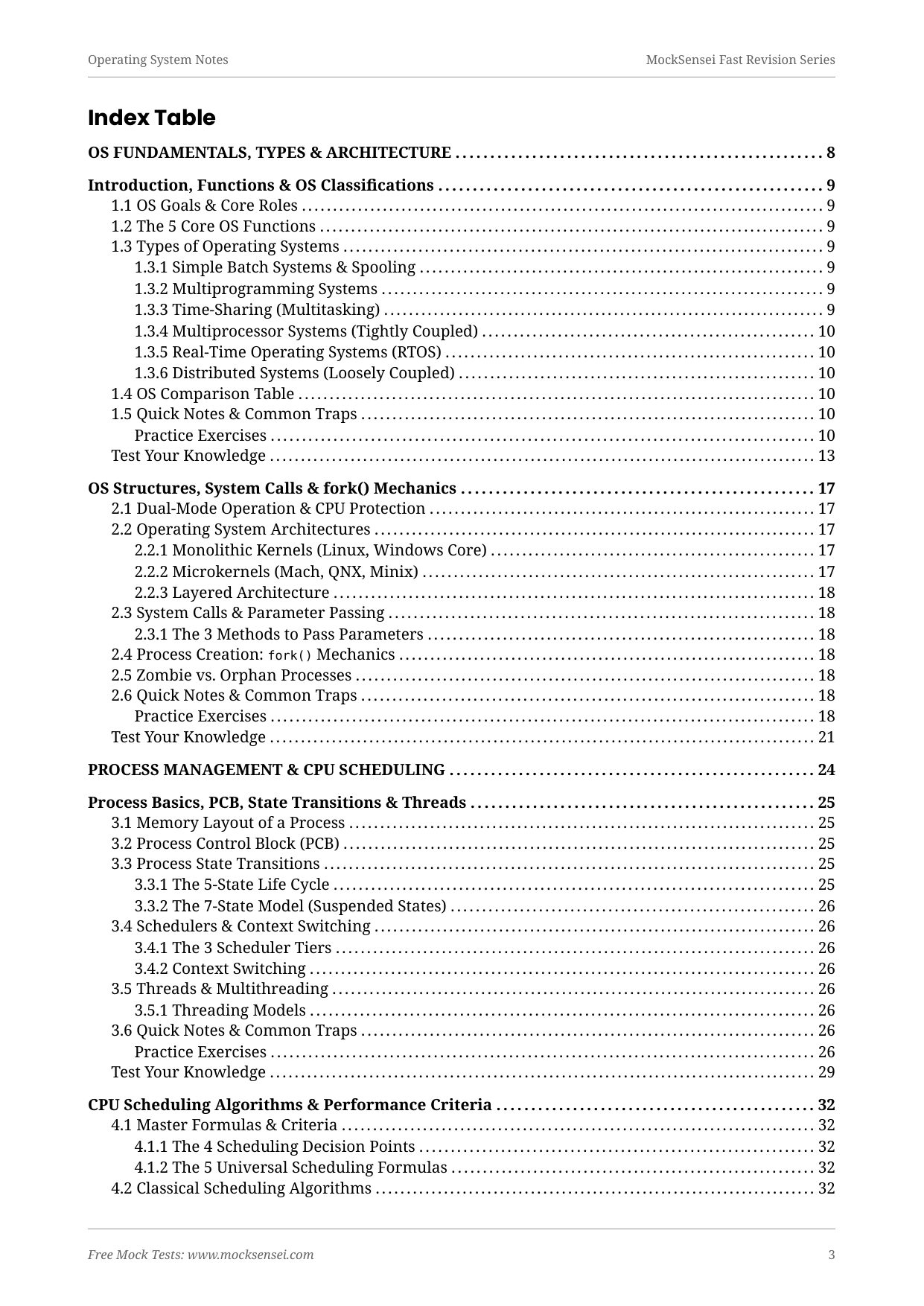
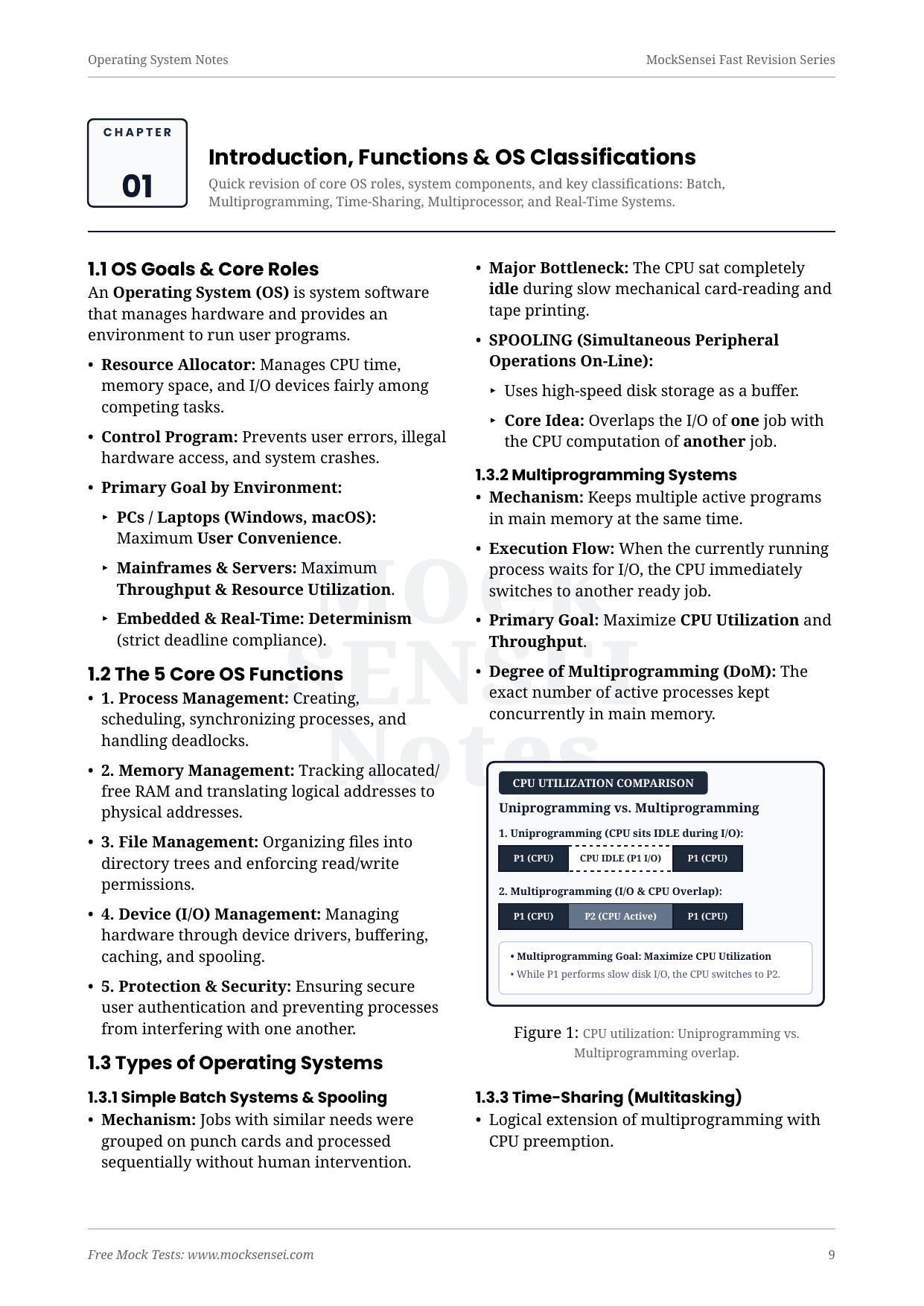
Sample pages showing the high-contrast formatting, cheat-sheet summaries, and structured practice layouts.
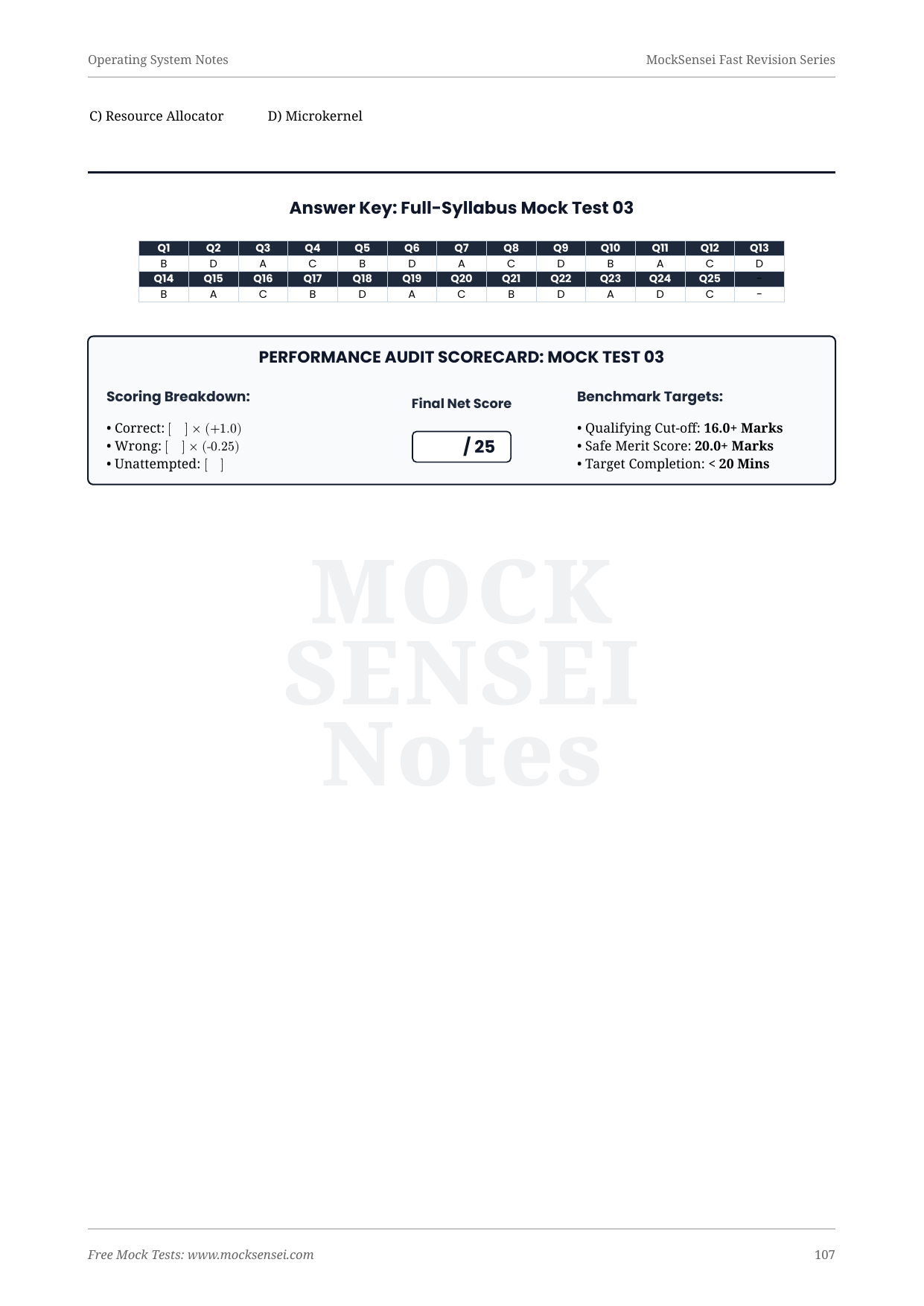
Practice on Screen. Or Solve on Paper.
Most platforms lock you into an app or force you to buy expensive physical books. MockSensei’s Dual-Mode Assessment Engine™ gives you both in a single manual.
Live Interactive Test Room
Experience the authentic pressure of real digital examinations with our browser-based CBT simulation.
- Official Countdown Timers: Practice managing pacing and time pressure.
- Unlimited Free Retakes: Re-attempt mocks anytime without consuming test credits.
- Instant Analytics & Solutions: Automated scorecards with step-by-step math breakdowns.
High-Contrast Printable Paper
Take a break from eye strain. Print clean, distraction-free test papers and solve them with pen on paper.
- Zero-Ink-Waste Layout: Pure monochrome high-contrast formatting (no dark backgrounds).
- Beat Screen Fatigue: Designed for long study hours without blue-light exhaustion.
- A4 Margins & Answer Keys: Formatted with margin gutters for easy clip-filing and revision.
Direct Test Room Link: Offline Meets Online
Every mock test in your downloaded PDF includes an exclusive direct Test Room link. If you solve a test on paper, simply tap or click the link to instantly launch the timed test room, verify your score, calculate negative marking, and review detailed mathematical solutions.
What's Inside the Notes
7 structured modules engineered for maximum concept recall in technical examinations.
OS Fundamentals, Types & Architecture
- OS Goals & System Components: User Convenience vs. System Throughput
- OS Classifications: Batch, Multiprogramming (DoM), Time-Sharing & RTOS (Hard vs. Soft)
- Architectural Models: Monolithic Kernels vs. Microkernels (Mach, QNX) & Layered Systems
- Dual-Mode CPU Execution: User Mode (Mode 1) vs. Kernel Mode (Mode 0) & Timer Interrupts
- System Call Traps & `fork()` Mechanics: Process Creation Tree Math (2^n - 1) & Zombie States
Process Management & CPU Scheduling
- Memory Layout of a Process: Stack (Downward) vs. Heap (Upward), BSS & Text Segments
- Process Control Block (PCB) Anatomy & Context Switching Overhead
- Process State Transitions: 5-State Life Cycle & 7-State Suspended Swap-Space Models
- Scheduling Tiers: Long-Term (DoM Control), Short-Term (CPU), and Medium-Term (Swapper)
- Gantt Chart Math: FCFS (Convoy Effect), SJF, SRTF, Priority (Aging) & Round Robin (q)
Concurrency, Synchronization & Semaphores
- Principles of Concurrency: Race Conditions & Assembly-Level Register Interleaving Proofs
- Critical Section Criteria: Mutual Exclusion, Progress (No Outside Blocking) & Bounded Waiting
- Software Solutions: Strict Alternation Flaw, Dekker's & Peterson's Algorithm Proofs
- Atomic Hardware Primitives: `TestAndSet()`, `CompareAndSwap()` & Spinlocks
- Semaphores & Classical IPC: Counting vs. Mutex Math, Producer-Consumer, Reader-Writer & Dining Philosophers
Deadlock Characterization & Management
- The 4 Necessary Coffman Conditions & Deadlock vs. Starvation Differences
- Deadlock-Freedom Formula: Minimum Resources [R >= N(K - 1) + 1] for N Processes
- Resource Allocation Graphs (RAG): Single-Instance (Cycle <=> Deadlock) vs. Multi-Instance Rules
- Deadlock Prevention: Invalidation Protocols & Havender's Linear Ordering [F(Rj) > F(Ri)]
- Banker's Algorithm: Need Matrix Math (Max - Allocation), Safety Algorithm & Recovery Rollbacks
Main Memory Management & Virtual Memory
- Contiguous Memory Allocation: Fixed vs. Dynamic Partitioning, Fragmentation & Compaction
- Placement Strategies: First-Fit, Best-Fit & Worst-Fit Leftover Hole Trade-offs
- Paging Architecture: Logical (p, d) to Physical (f, d) Address Translation & PTBR
- Paging Math: Page Table Size Calculations, P/2 Internal Fragmentation & Multi-Level Splits
- Segmentation & Protection: Segment Base/Limit Hardware Checks & Paged Segmentation
Storage, File Systems & Linux Internals
- Magnetic Disk Access Math: Seek Time, Rotational Latency (30 / RPM seconds) & Transfer Time
- Disk Scheduling Calculations: FCFS, SSTF, SCAN (Elevator), C-SCAN, LOOK & C-LOOK
- RAID Storage Redundancy: RAID 0, RAID 1, RAID 5 (N-1 Disks), RAID 6 (N-2 Disks) & RAID 10
- UNIX Inode Multilevel Pointers: [12 + K + K^2 + K^3] * Block Size Max File Size Math
- Linux Shell Administration: Octal File Permissions (`chmod 754`), `umask` Math & Core Commands (`grep`, `find`, `ps`)
Full-Length Mock Tests
- 5 full-syllabus mock tests (125 exam-pattern questions)
- Timed exam conditions (20 minutes / 25 marks / -1/3rd negative marking)
- Consolidated answer sheets with step-by-step numerical explanations
The Active Revision Cycle
Designed as an iterative learning loop rather than passive reading material.
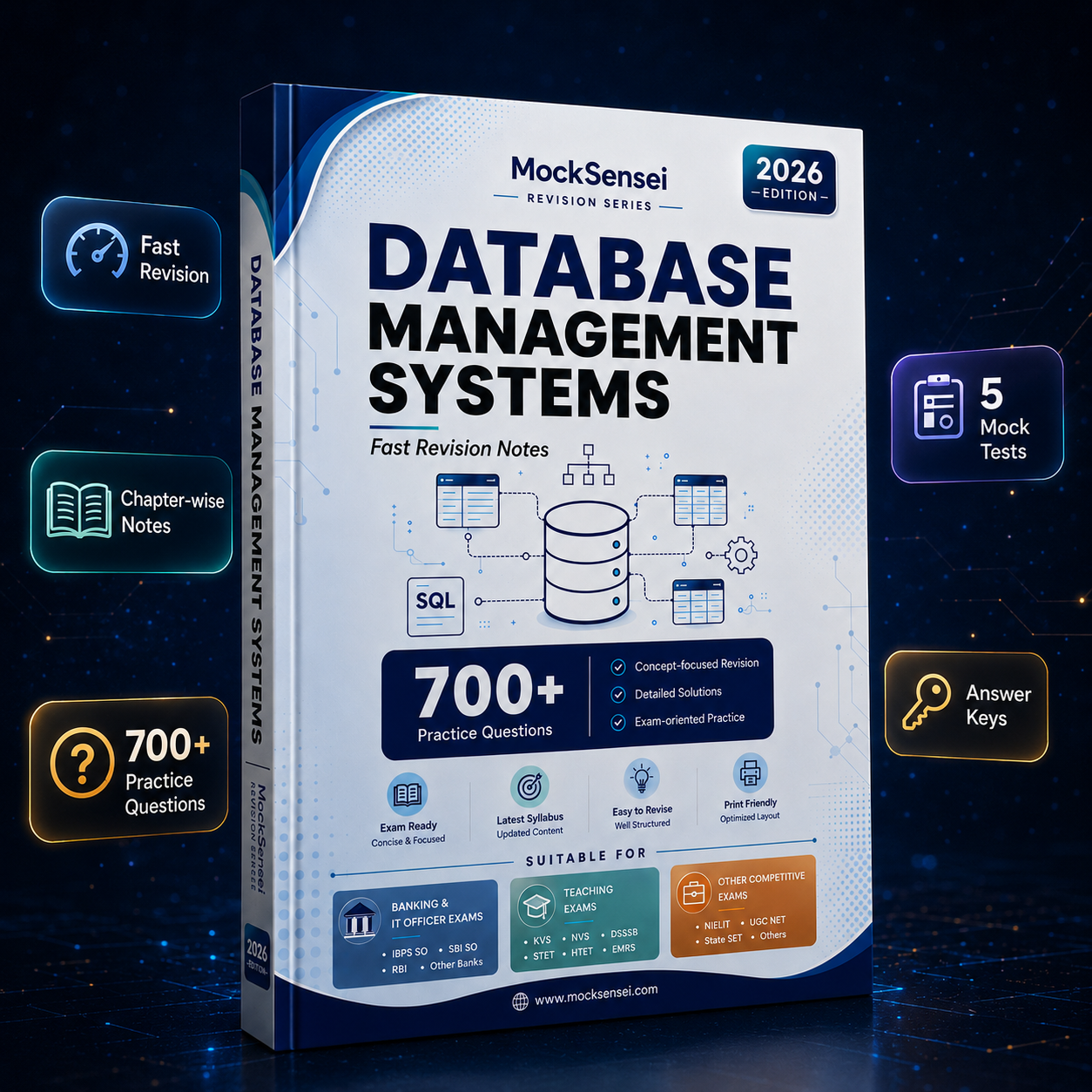
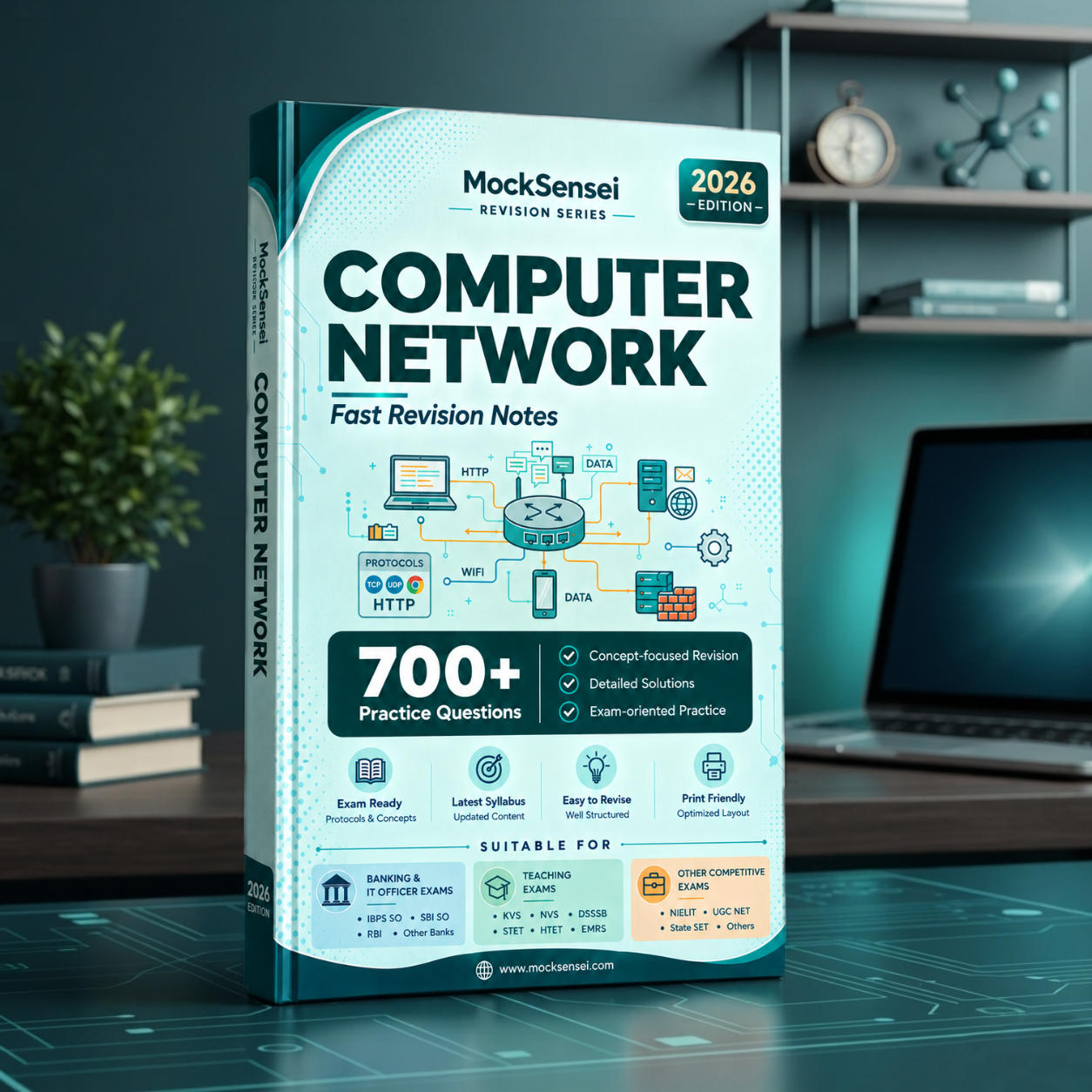
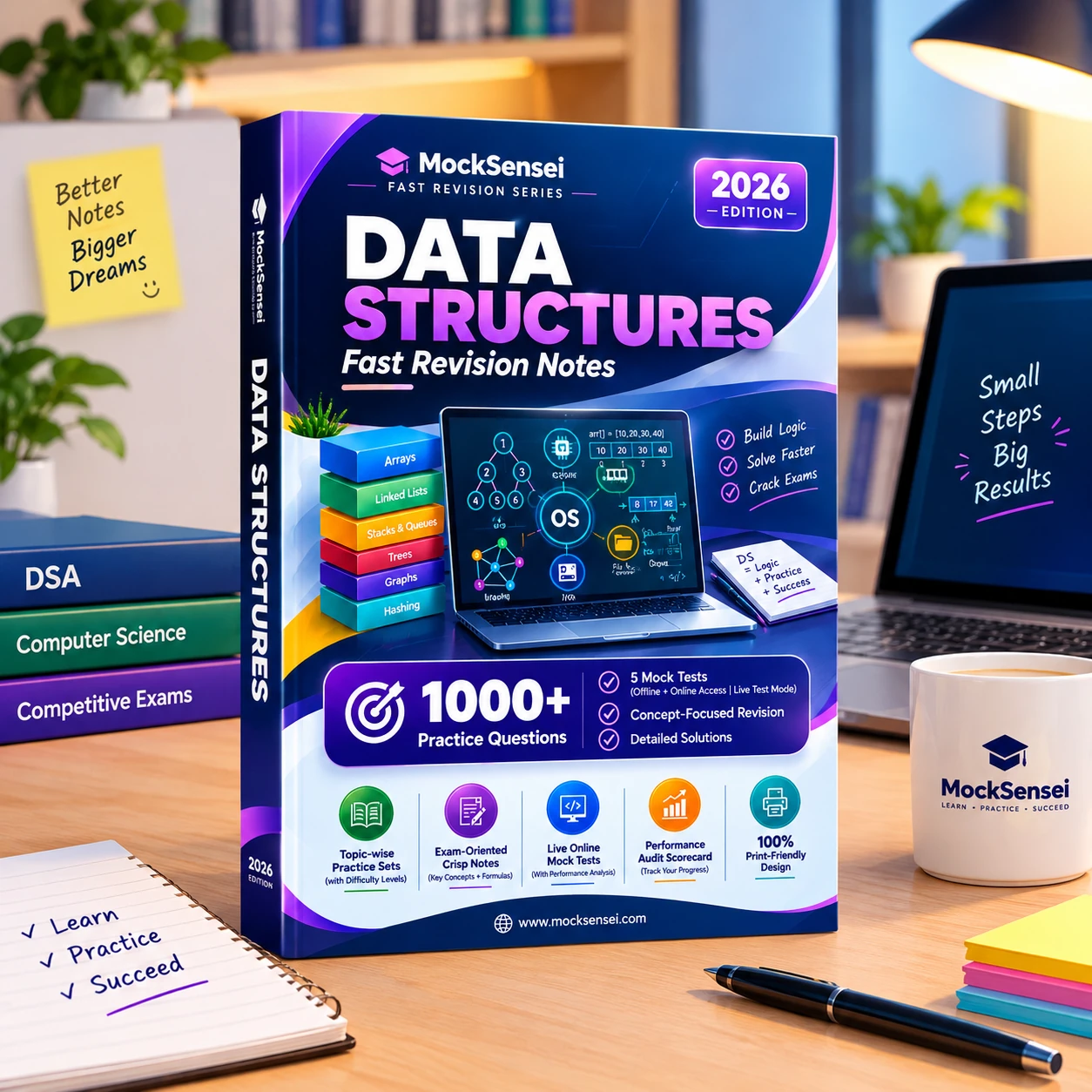
More in MockSensei Fast Revision Series
High-yield conceptual notes and chapter-wise practice tests for CS/IT.
Need Another Subject?
Vote for our next manual—whether it is Operating Systems, Compiler Design, or Data Structures. We prioritize subjects based on student demand.
Operating Systems Fast Revision Notes
Instant Downloadable PDF
- Complete Operating Systems fast-revision manual
- 7 modules, 12 comprehensive chapters (115 core pages)
- Process Synchronization, Paging, Deadlocks & Linux Internals
- 5 full-syllabus mock tests (125 exam-pattern questions)
- High-contrast, strictly monochrome print-friendly layout
- Instant digital delivery & lifetime free edition updates
Secure 256-bit payment via Razorpay
Explore All MockSensei Series
Targeted publications designed for different competitive exam streams and preparation styles.